Introducing the Gateway Park Solution
A Better Future for Provo Canyon Is Possible.
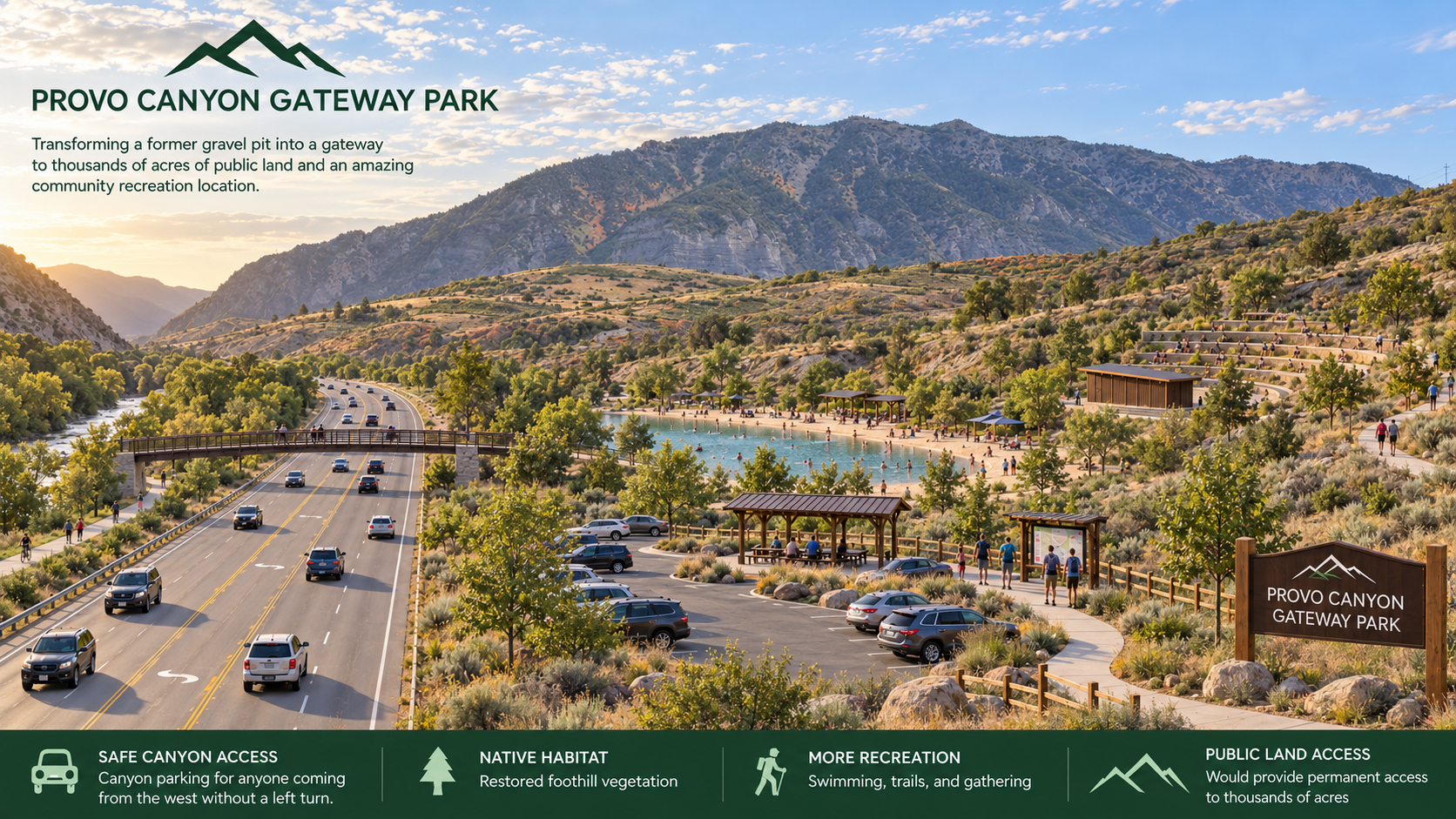
What if we could permanently protect the entrance to Provo Canyon — and transform the gravel pit into a beautiful public gateway for recreation, conservation, and canyon access?
With serious private donor interest in conservation, there's an opportunity to explore a different future for this land.
Conceptual rendering. Proposed amenities, land protection, and improvements are subject to agreements, funding, and appropriate approvals.
A real alternative
We Don't Have to Choose Between a Gravel Pit and an Entertainment District.
For years, the gravel pit at the mouth of Provo Canyon has represented a disturbed landscape at the entrance to one of Utah Valley's most treasured natural places.
But the future of this property doesn't have to be limited to continued extraction or large-scale commercial development.
A conservation-focused alternative offers another possibility: protect the landscape from incompatible future development, restore disturbed areas, and create lasting recreational value for the community.
Permanent Land Protection
Explore a legally enforceable conservation easement that could restrict incompatible development on protected parcels.
Private Philanthropic Investment
Engage serious conservation-minded donors interested in helping finance long-term protection.
Public Recreation Opportunity
Work toward a restored gateway featuring trails, natural gathering spaces, recreation infrastructure, and expanded canyon access.
How the solution works
Protect the Land. For Generations.
A conservation easement is a legal tool that can protect land by limiting certain future development rights while allowing ownership to remain with the landowner.
Utah law recognizes conservation easements for protecting scenic landscapes, open space, recreation, wildlife habitat, and other qualifying conservation values.
With the right landowner agreements, conservation partner, funding, and legal structure, this approach could establish durable protection for the gateway to Provo Canyon.
How Conservation Could Work
Stage 01
Secure Landowner Participation
A conservation easement is voluntary. Nothing can be protected until the landowners who hold the relevant rights choose to participate — through an easement, a purchase, or another arrangement they find acceptable.
What it depends on
Requires willing landowners, a clear picture of parcel boundaries and existing rights, and a conservation partner able to negotiate in good faith.
What an easement does — and doesn't do
- A conservation easement requires landowner participation or an appropriate land acquisition.
- An easement does not automatically establish public access.
- The easement's permitted and prohibited uses must be carefully drafted.
- Public recreation amenities require compatible legal rights, funding, planning, and approvals.
- A qualified easement holder must be identified.
Private capital. Public possibility.
A Vision Worth Investing In.
Serious private donors have expressed interest in helping support a conservation-focused alternative for the gateway to Provo Canyon.
That interest opens the door to exploring a privately supported path toward land protection, restoration, and lasting public benefit.
This effort would require cooperation among landowners, conservation partners, donors, and appropriate public agencies. But the opportunity deserves serious consideration.
Privately supported conservation
Long-term stewardship
Enduring community value
Donor interest does not constitute secured project financing. Specific funding arrangements and commitments remain subject to confirmation.
The vision for what comes next
From Gravel Pit to Gateway Park.
Imagine restoring a disturbed landscape into a beautiful entrance to Provo Canyon — designed for public access, recreation, natural habitat, and everyday enjoyment.
Conceptual rendering — tap a feature below to learn what it could include.
A welcoming recreational starting point at the mouth of the canyon.
Possible benefits: Gives canyon visitors a clear, organized place to begin a hike, ride, or riverside walk.
Subject to public-access rights, site planning, and trail easements.
Restored vegetation and ecological landscape improvements on disturbed ground.
Possible benefits: Replaces gravel and dust with native grasses, shrubs, and trees that support wildlife and hold the hillsides together.
Subject to site conditions, water availability, and a restoration plan.
Potential trailhead parking and transportation connections.
Possible benefits: Takes pressure off informal roadside parking and gives recreation users a predictable place to leave a car.
Subject to transportation study, access rights, and appropriate approvals.
Explore feasible water-oriented recreation opportunities.
Possible benefits: Could open up wading, paddling, and riverside relaxation that the gateway currently doesn't offer.
Subject to water rights, safety analysis, habitat considerations, and agency review.
Family-oriented play integrated into the landscape.
Possible benefits: Gives kids a reason to love the canyon gateway — built from natural materials rather than plastic and concrete.
Subject to site planning, safety standards, and funding.
A possible safer connection across the highway.
Possible benefits: Links the park to trails and the river without asking families to dodge highway traffic.
Subject to UDOT coordination, engineering study, and funding.
Picnic areas, seating, and flexible outdoor spaces.
Possible benefits: Room for family reunions, evening picnics, and the everyday gatherings that make a place feel like everyone's.
Subject to site planning and public-access rights.
Places to appreciate the canyon landscape.
Possible benefits: Quiet spots to take in the canyon walls, the river, and the evening light — no ticket required.
Subject to trail construction and slope-stability review.
Restrooms, water refill, trail information, and visitor facilities.
Possible benefits: The practical comforts that make a park usable for everyone, from toddlers to grandparents.
Subject to utilities, building permits, and funding.
Potential improvements connecting to existing canyon recreation.
Possible benefits: Ties the gateway into the trail networks people already love, instead of leaving it as an island.
Subject to agreements with land managers and trail easements.
Every feature shown is conceptual. What is ultimately built would depend on site conditions, public-access rights, detailed planning, funding, and appropriate approvals — not every amenity may prove feasible or appropriate for the final protected area.
The transformation
What Could This Land Become?
Restoring a gravel pit is no small undertaking. But with thoughtful planning, land restoration, and sustained investment, a disturbed site could become a valuable public landscape.
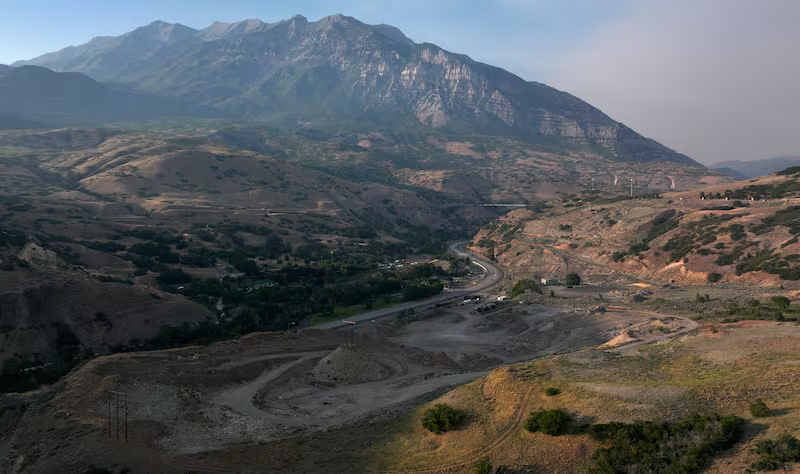 Current conditionsA conservation-first future
Drag the handle to compare. Left: a photo of the site as it exists today. Right: a conceptual rendering of what a restored gateway could become — not an approved plan.
The possibilities
More Than a Park. A Gateway to the Canyon.
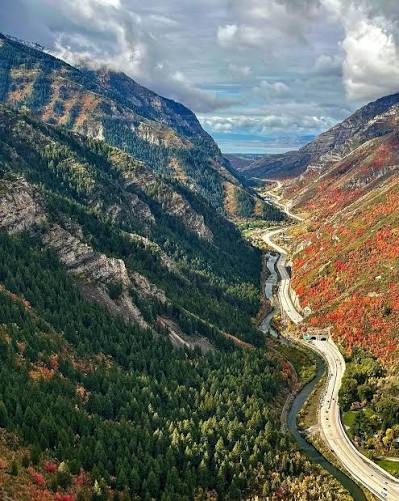
01
Better Canyon Access
Potential connections between parking, trails, and recreation — a clearer way into the canyon for everyone.
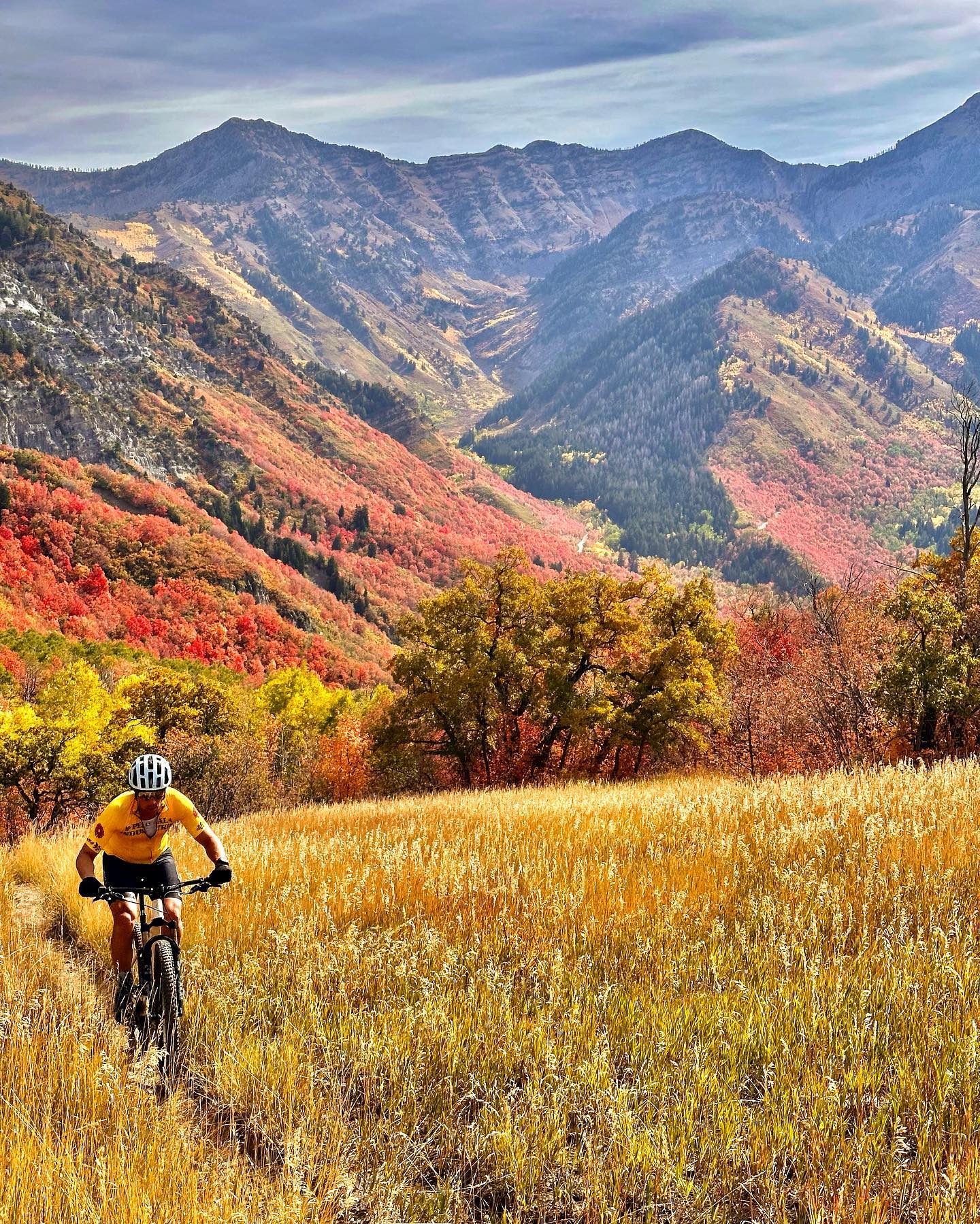
02
More Everyday Recreation
Walking, biking, nature exploration, picnicking, family activities, and community gathering.
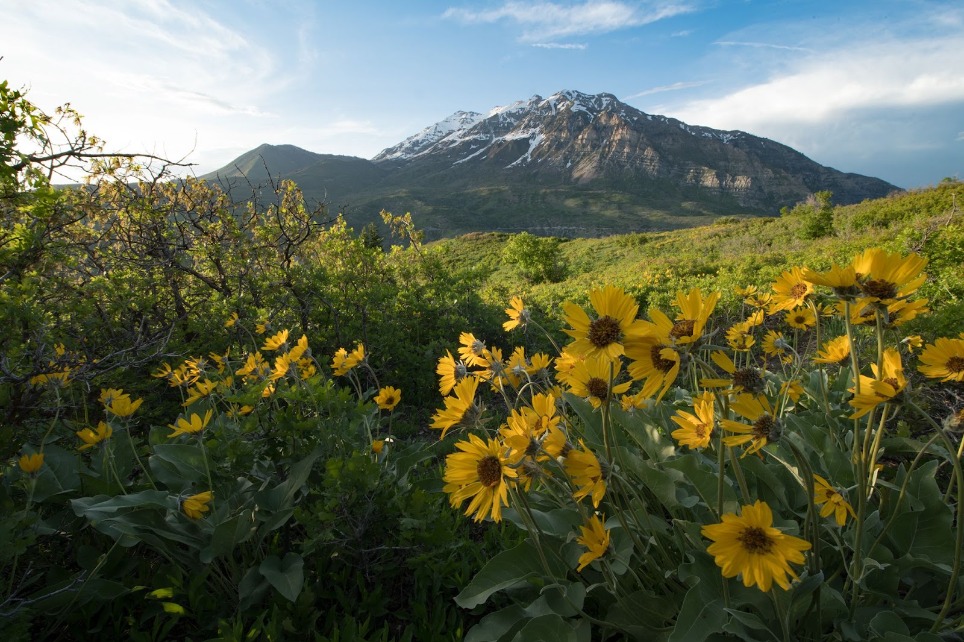
03
Restored Natural Landscape
Native vegetation, habitat improvements, ecological restoration, and improved natural scenery.
04
Long-Term Land Protection
Durable legal restrictions designed to preserve the conservation values of the protected property.
From vision to action
Here's What It Would Take.
This is a real path, with real requirements. None of these steps is complete today — and each one is shown honestly, so documented milestones can be added as the initiative develops.
- STEP 1In progress
Identify the Land
Confirm relevant parcels, landowners, boundaries, existing rights, and land-use constraints.
- STEP 2Not started
Engage Landowners
Explore mutually acceptable purchase, easement, or other voluntary conservation arrangements.
- STEP 3Not started
Structure the Investment
Work with donors and partners to evaluate acquisition, easement, restoration, legal, and long-term stewardship costs.
- STEP 4Not started
Establish Legal Protection
Develop appropriate conservation easement instruments, identify a qualified holder, and complete the necessary transactions.
- STEP 5Not started
Plan the Gateway
Conduct transportation, environmental, engineering, safety, and public-access studies.
- STEP 6Not started
Restore and Open
Develop feasible recreation amenities in phases as permissions, financing, and approvals allow.
Your voice
What Would You Want to See at Gateway Park?
Tell us which improvements matter most to you. Your input helps shape what a restored gateway could become.
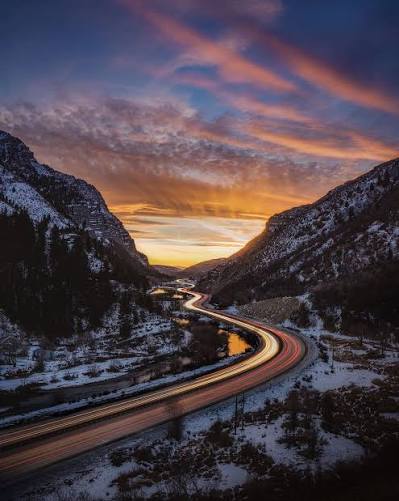
An opportunity for generations
Let's Protect What Makes Provo Canyon Special.
A conservation easement could create lasting protections at the canyon's entrance. Private investment interest creates an opportunity to explore how those protections could be financed. Gateway Park offers a vision for the public benefit that could follow.
Now is the time for thoughtful collaboration around what this land could become.
Stay informed.
Updates on the Gateway Park effort, meetings, and the canyon — no more than you need.